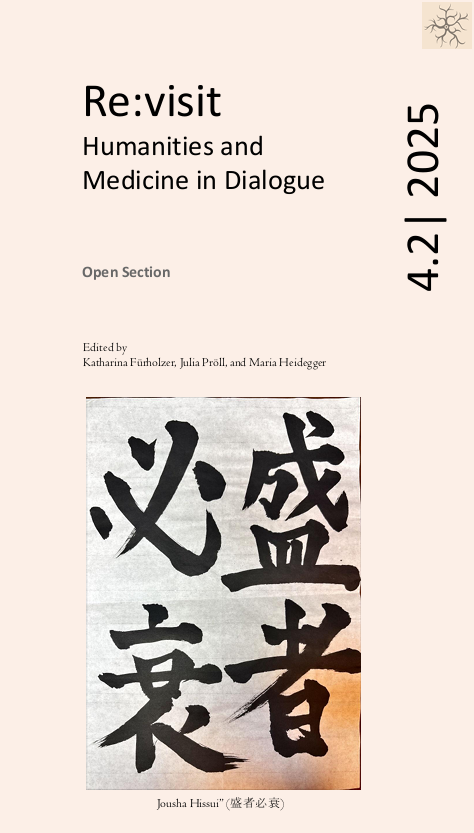
Brushstrokes of Healing
Japanese Calligraphy and Its Role in Supporting Patients with Terminal Brain Cancer
DOI:
https://doi.org/10.57974/Schlagwörter:
calligraphy, palliative care, medicine and artAbstract
This report examines the challenges of palliative care for terminal neurological diseases, particularly high-grade brain tumors such as glioblastoma, where progressive cognitive and motor decline can lead to isolation, disrupted communication, and loss of identity. It argues that while standard palliative approaches provide essential symptom management, they often inadequately address patients’ needs for meaning, agency, and legacy at the end of life. The report therefore explores expressive, non-pharmacological interventions and focuses on shodō (Japanese brush-and-ink calligraphy) as a culturally grounded, multisensory practice that combines motor activity, attentional focus, aesthetic intention, and meditative discipline rooted in Zen traditions. Drawing on clinical observation and interdisciplinary research from Japan, the UK, and the US, it evaluates the emotional and cognitive potential of brushwork for patients with declining speech or autonomy, reviews emerging clinical outcomes, and discusses cross-cultural, ethical, and implementation considerations. The report concludes by recommending a more inclusive model of palliative healing that attends to both neurological deterioration and the patient’s search for expression and dignity.
Downloads
Veröffentlicht
Ausgabe
Rubrik
Lizenz
Copyright (c) 2025 Saivikram Madireddy, Hibiki Yamazaki, Masayuki Ueda, Masashi Hamada, Francesco Panto, Kana Kaburagi

Dieses Werk steht unter der Lizenz Creative Commons Namensnennung 4.0 International.